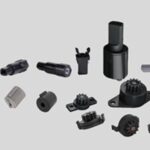
To recommend a rotary damper that fits your product seamlessly, performs reliably, and meets user needs, we require specific, application-focused information. Below is a structured list of critical details—organized for clarity—with references to your small drawer-assist mechanism example to illustrate how each requirement shapes the solution.
1. Application Overview & UX Goals
- Product/application name: e.g., “Small drawer-assist mechanism with mainspring and rack-and-pinion drive”
- Core function: What motion are you controlling? e.g., “Drawer opening/closing”
- UX objectives: Desired feel/performance? e.g., “Slow, smooth open; silent, effortless return”
- Use environment: Where will the product be used? e.g., “Indoor consumer furniture (10–40°C, low humidity)”
2. Damping Performance Requirements
These specs define how the damper functions (non-negotiable for performance):
- Damping type: One-way (damp in one direction) or bi-directional (damp both directions)? e.g., “One-way (damp on opening, free return)”
- Target torque range: At a specific speed (critical for smooth motion)? e.g., “2 N·mm at 30rpm”
- Free direction torque (one-way dampers): Maximum resistance in the “free” direction? e.g., “≤0.3 N·mm”
- Operating speed range: How fast will the component move? e.g., “30–100 rpm”
3. Mechanical Fit & Mounting Constraints
Ensure the damper physically integrates with your product:
- Envelope limits: Maximum length × width × height (L×W×H) the damper can occupy? e.g., “20 × 20 × 15 mm”
- Mounting orientation: How will it be installed? e.g., “Horizontal”
- Shaft/hub requirements: Shaft diameter, shape, or hub type? e.g., “3 mm straight shaft or keyed hub”
- Working angle: Total rotational range needed? e.g., “~180° (0.57 turns)”
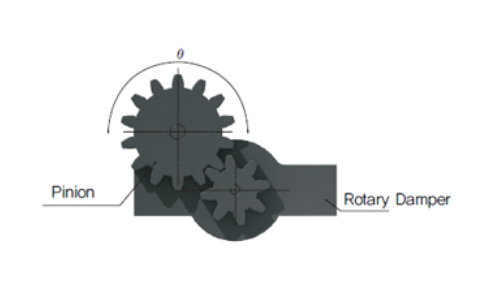
A 16×16×10 mm one-way damper (within 18×18×11 mm limits) with a 3 mm shaft—ideal for the example drawer mechanism.
4. Durability & Material Specifications
Ensure long-term reliability and quality alignment:
- Cycle life: Minimum number of open/close cycles required? e.g., “≥30,000 cycles”
- Material preferences/constraints: Acceptable body/shaft materials? e.g., “Plastic body (PA66), metal or plastic shaft”
- Special material needs: Corrosion resistance, food safety, or non-toxicity? e.g., “None (standard consumer-grade materials)”
5. Additional Constraints (If Applicable)
Share any other limits that impact the recommendation:
- Cost target: Budget per unit
- Certifications: Required standards (e.g., “RoHS-compliant”)
- Lead time: Urgency for samples/production (e.g., “Samples needed in 3 weeks”)
How We Use This Information to Recommend Your Damper
With your details, we follow a streamlined process to narrow down the perfect fit (using your drawer example):
- Filter hard constraints: Eliminate dampers exceeding envelope size, missing cycle life, or mismatched mounting.
- Align performance: Select models matching torque, speed, and damping type.
- Validate fit: Confirm shaft size, working angle, and material compatibility.
- Optimize UX: Prioritize low noise and free-direction torque to meet your “smooth open, silent return” goal.
Example of a Complete Customer Submission (Template)
Application: Small drawer-assist mechanism (mainspring + rack-and-pinion) for consumer storage furniture.
UX Goal: Slow, smooth opening; silent, effortless return.
Damping Type: One-way (damp on opening, free return).
Torque: 3–5 N·mm at 20rpm;
Speed: 20–100 rpm
Fit: Envelope ≤20 × 20 × 15 mm; horizontal mounting; 3 mm shaft/keyed hub; working angle ~200°.
Durability: ≥30,000 cycles; plastic body (PA66), metal/plastic shaft.
Additional: RoHS-compliant; samples in 3 weeks.
By sharing these details, you ensure we recommend a rotary damper that requires no retrofitting, performs as intended, and enhances your product’s user experience. The more specific you are, the faster we can deliver a tailored solution.