Temperature and RPM are critical external factors that affect the torque performance and selection of rotary dampers for mechanical applications.
Temperature Impact on Damper Torque
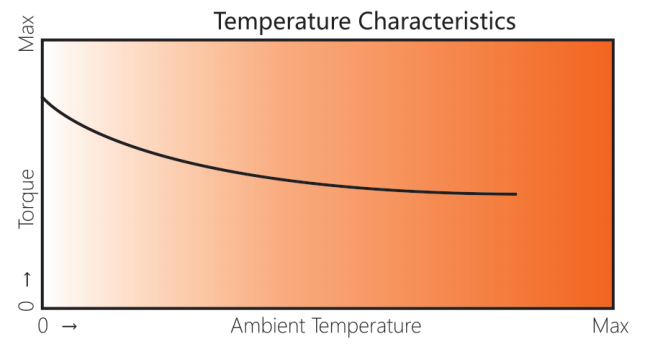
Rotary dampers rely on internal viscos fluids or greases, whose viscosity changes with temperature. As temperature increases, the fluid’s viscosity decreases, leading to less torque and softer damping. Conversely, lower temperatures increase viscosity, resulting in higher torque and stiffer operation.
Manufacturers typically provide torque ratings at standard temperatures (often room temperature 23℃). For reliable damper performance:
-
Always check the damper’s operating temperature range in the datasheet.
-
Apply correction factors or consult torque curves provided for various temperatures.
-
Consider temperature compensation in torque calculations, especially for cold or hot operating environments.
RPM Effect on Rotary Damper Performance
Torque output of rotary dampers is also influenced by rotational speed (RPM). In most viscos dampers:
- As RPM increases, the resistive force (torque) generally increases, but the relationship can be nonlinear at high speeds due to fluid shear thinning or heating effects.
- Damping torque is rated typically at a specific RPM, so selecting a damper for higher RPM may require a unit sized for higher dynamic loads.
Key considerations:
- Confirm the damper’s RPM rating against the application’s speed.
- If the application regularly exceeds the rated RPM, expect reduced lifespan or inconsistent torque performance.
Selecting Correct Damper Torque needs to communicate with the engineer about the usage conditions.
When choosing a rotary damper:
- Account for both minimum and maximum expected temperatures and the corresponding torque variation.
- Evaluate the damper’s torque output across your RPM range—not just at nominal speed.
- Work with torque graphs or correction tables from the manufacturer.
- Consider using temperature-stable fluids or custom dampers for extreme environments.