Select the motion profile first, then choose a damper torque curve that controls the point where the load is most likely to accelerate. A damper that is sized only by part weight may still produce slamming, jerking, or an overly stiff feel.
Q1. Why should motion path come before torque rating?
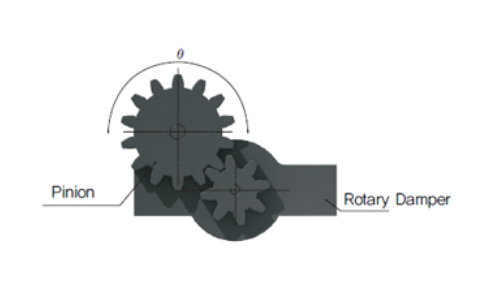
The same lid weight can behave very differently depending on its pivot, opening angle, gravity direction, and supporting mechanism. A cover that closes toward a horizontal position gains speed near the end of travel, while a vertical door may accelerate most around its horizontal midpoint. Continuous rotating systems can also include gears or springs that change the load seen by the damper.
Q2. Which torque profile should match each motion type?
For a lid that finishes near horizontal, use a profile that adds resistance as the lid approaches its closing position. For a door that moves through a horizontal midpoint on the way to vertical, the highest useful resistance is often around that midpoint. For a gear- or spring-assisted mechanism that rotates through its range, a more consistent torque profile is usually easier to tune. These are starting points, not substitutes for a sample test in the final assembly.
Q3. What must be checked before releasing a design?
Confirm the actual operating angle, closing time, torque at the working speed, available installation envelope, and performance across the expected temperature range. Test the damper with the real hinge, lid, spring, or gear set rather than on a stand-alone fixture alone.
Clear conclusion: Choose a rotary damper by matching its torque curve to the product’s motion path and peak acceleration point. Start with a calculated range, but approve the final specification only after system-level testing.
FAQ candidates:
| Question | Concise answer |
|---|---|
| Can I choose a rotary damper from lid weight alone? | No. Weight is only one input; motion path, pivot position, angle, speed, gravity, and any spring or gear assistance also change the required damping. |
| What damper profile suits a horizontal-closing lid? | A profile that increases resistance near the closing position is generally the right starting point because the lid often accelerates near horizontal. |
| Should I test a damper in the real assembly? | Yes. Final approval should use the actual lid, hinge, mounting layout, and operating conditions. |